

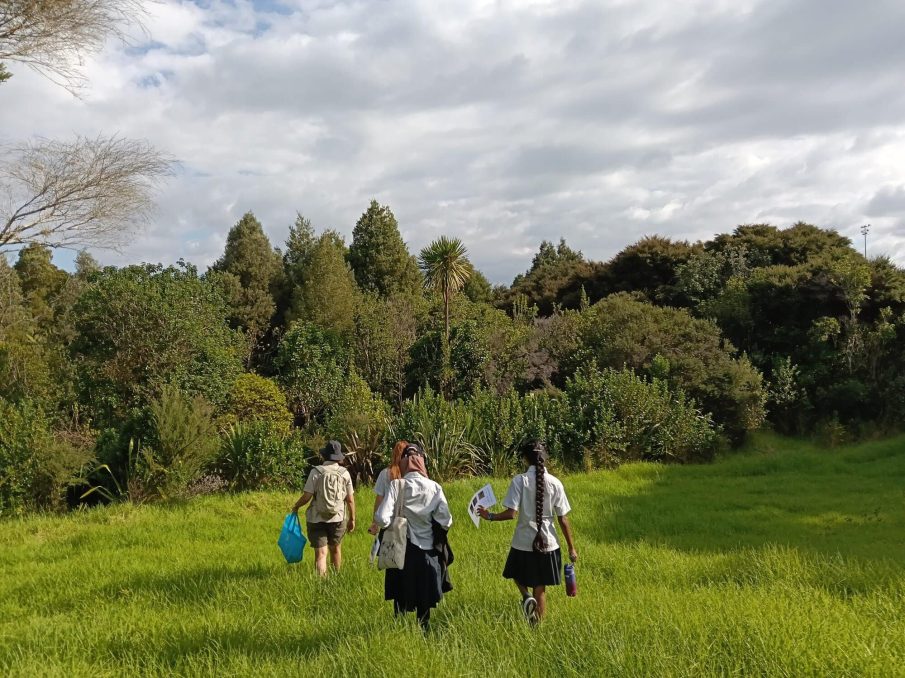
To kick off our year in the Kaitiaki group, we took an introductory trip down to Smiths Bush to get a taste of what lies within the bush. Smiths Bush is a natural bush that used to once cover the Northern motorway. What is left of Smiths Bush is merely half of what it used to be before, which calls us to protect it even more.
Throughout our visit, we also did an activity to check how healthy this reserve was. The afternoon started off as we briskly walked to Smiths Bush with the group. There, we met our ranger who guided us through the calm bush. We got handed a whiteboard marker and a sheet with plants and insect images to cross off if spotted through the bush. As we walked to the heart of the bush we noticed how there weren’t many birds or insects. Due to the motorway being right next to the bush, the noise pollution affects biodiversity. Curiously, we followed our ranger, finding ourselves next to a small stream gushing down with water. From our ranger, we found out that the stream connects to the Wairau River that runs through our suburbs. Intently, we listened as our ranger explained what sorts of creatures that live in this spectacular stream. Another fact that we discovered is that the Smiths Bush stream is pretty healthy compared to many other rivers and streams across Auckland.
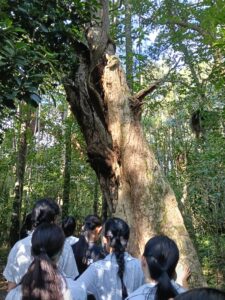
Native Trees and Plants
There are a variety of native trees and plants at Smiths Bush, from big puriri to small kawakawa. Two years ago, Westlake Girls went to Smiths Bush to plant cabbage trees and harakeke to help a small area to be flood safe. With these plants, there are lower chances for landslides, and damage in the Bush. Harakeke, also known as flax, grows flowers that are enjoyed by the tui. Throughout the walk, we learnt the benefits and disadvantages of each plant. One of the important plants is kawakawa, a palm-sized leaf with tiny holes that is the shape of a heart. Kawakawa was used as medicine for dental use or cuts/wounds. The widowmaker, or perching lily, is one of the dangerous plants in the bush. It got the name ‘widowmaker’ as inhabitants of this area were often crushed by it when it fell. These are only some of the natural wonders Smiths Bush has to offer.
Our first trip to Smiths Bush was very successful, and we intend to do a lot more there! We hope that as a kaitiaki group, we can keep up all the good mahi.
Written by Hifza Abubakkar and Punarvika Lokavarapu, Y9.